

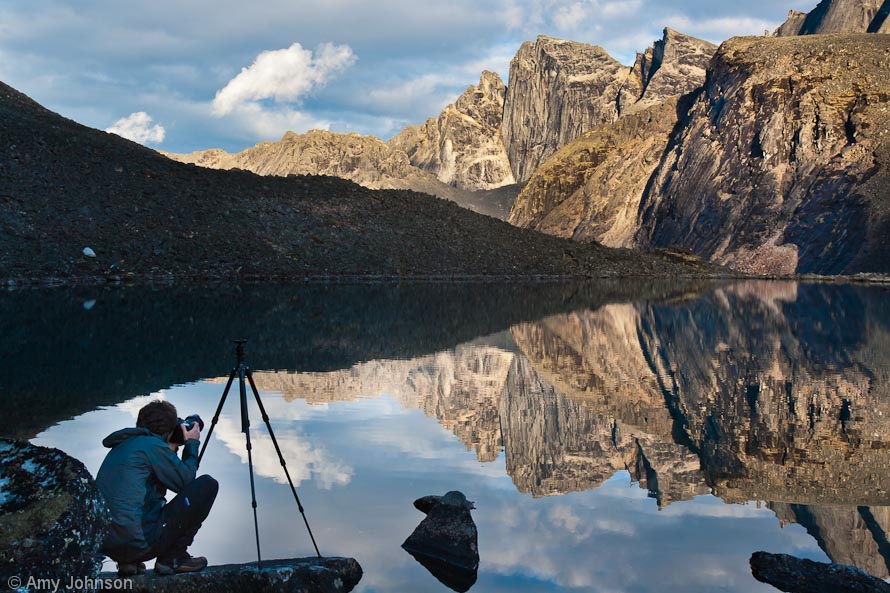
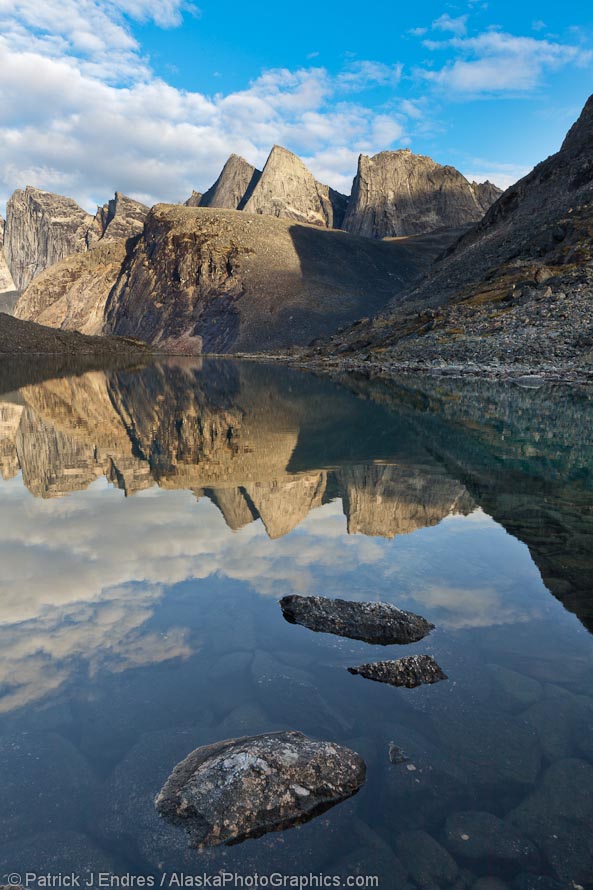
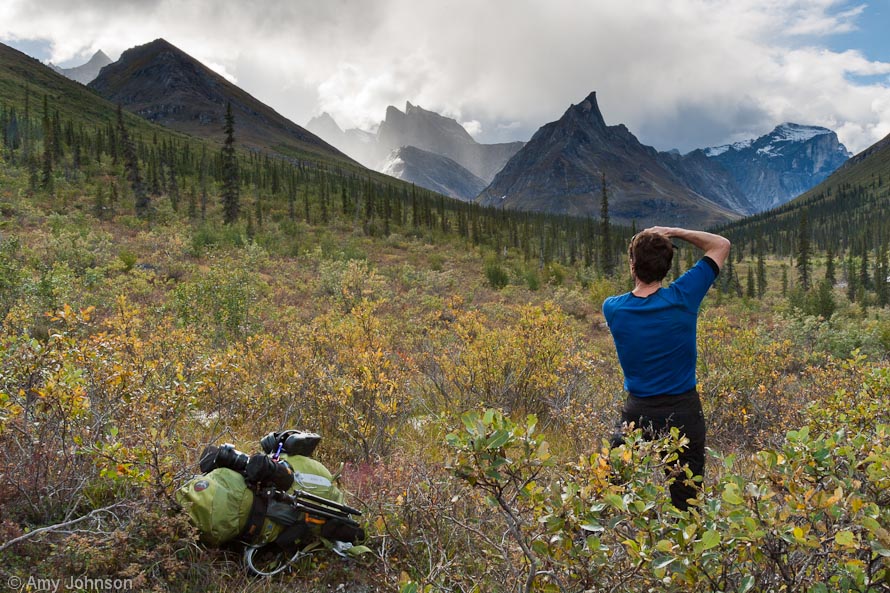
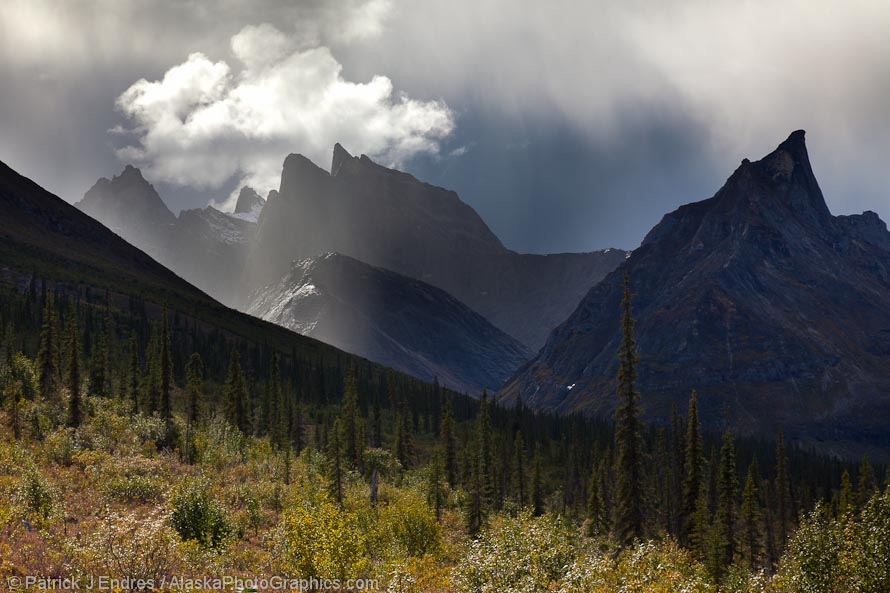
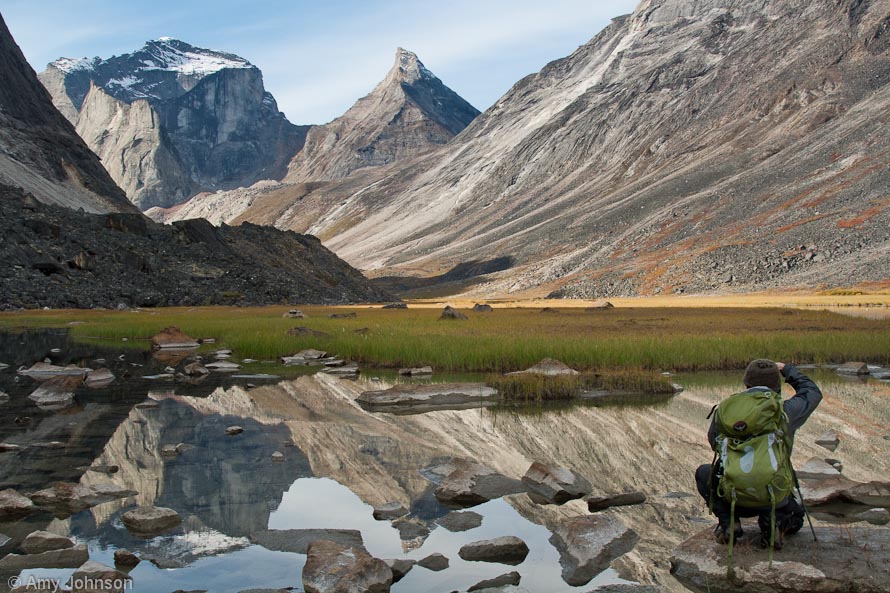
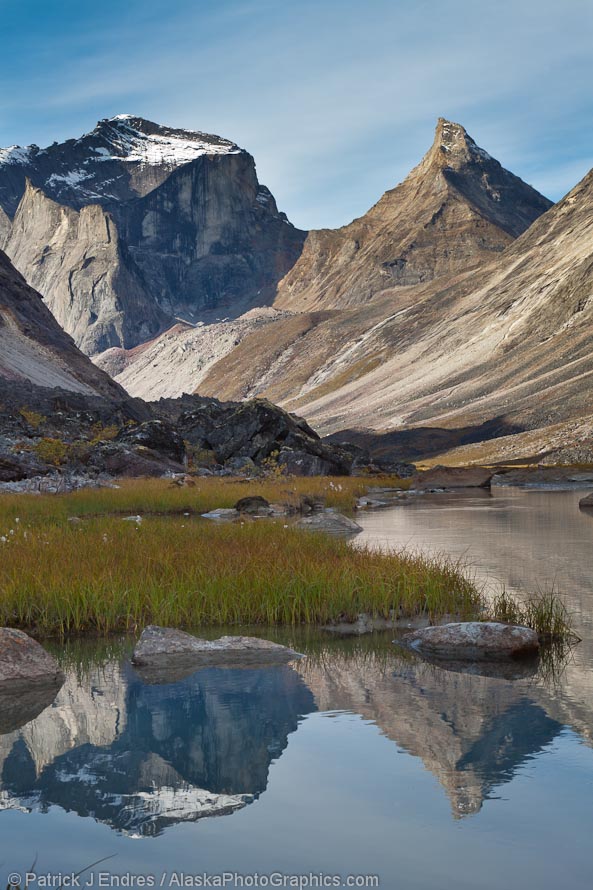
It’s a rare experience for me to end up with photos that show the back-end side of work, of framing a picture and working in the field. Amy, an avid photographer who was on the Arrigetch trip, shared some shots of me taking pictures so I thought it would be fun to show both sides–the picture and the picture taking process. Here are a few from that magnificent journey in the Arrigetch Peaks that stands as one of my all-time favorite treks in Alaska.



We can’t all be everywhere all the time, but I am super jealous of your fantastic Arrigetch Peaks images. It appears that you had an incredible trip! It’s going to be a few years until I have time in August to visit this fantastic area, so thank you for sharing them.
Jon,
You are welcome. So many magnificent places to see and capture with a camera. The Arrigetch area is certainly worth a visit.
It’s always interesting to get a look behind the scenes! I especially like the second ‘other side’; what looks great in the first photo has turned out almost magical in yours. Inspiring!
How fun to see you at work! 🙂
Also, Amy’s storytelling, composition, & exposures are great!
Did you consider using the first photo that Amy took as maybe an addition to your bio or on the back cover of the calendar? It is a great picture and perfect insight of what you do and who you are.
What a beautiful place! And what awesome photos of you at work. Photographers don’t often find themselves on that side of the camera.
JD, I’ll consider that, it is time for a bio update picture
Susan, Tim and Inge, it is fun to see someones interpretation of you at work – or is that play : )
Thanks for posting these behind the scenes pictures. Your Arrigetch Peak images are stunning. I would love to hear how you pack your gear in the backcountry. Thanks for more beautiful work.
Todd,
Thanks for your comments. As far as how pack my gear in the backcountry, it is very trip specific. In this particular case, due to weight, I chose to take my Canon 5D II, along with 16-35, 24-104 and the 70-300 DO, super lightweight carbon fiber gitzo tripod, 4 batteries, polarizer, remote release and a kinesis camera waist belt with two pouches. I did not have a camera bag. Instead I clip my camera to my backpack shoulder straps using kinesis straps that clip into my camera’s neck strap. That way, the camera hangs snugly at my chest while hiking. A secondary lens can be kept on the side of the pack in a pouch for easy access without removing the pack. Since this was largely a landscape photography trip, I used the wide angle lenses about 80% of the time. For inclement weather, I just use a small waterproof bag made by sea to summit, which can be put over the camera and lens and clipped shut. It works very well.
Patrick, thank for the quick reply. It’s great to hear about your approach to photography in the backcountry. I look forward to more outstanding work.