

Contrary to what many non-photographers think, the bluebird day, cloudless skies are generally not welcomed by the landscape photographer-not me anyway. They might ensure first and last light upon the land, but there is little art in the sky without some shapes and lines offered by broken clouds moving dynamically overhead. It is these latter conditions that attract me most. It may require waiting around for a while until the light spills in the right spot, but it renders a landscape of continual change.
When traveling through the Arctic National Wildlife Refuge in July, it rained 9 out of 11 days, and a few of those were thick and gray. Most days had a little sunshine however and the clouds that formed offered some good photography opportunities.
The dynamic range can present a challenge in these scenes and in some cases, especially when the sun is included in the picture, I will blend two exposures to manage tonal values (as well as lens flare management). I rarely do “Merge to High Dynamic Range” or HDR blends in Photoshop, but sometimes they can work well. In general, I find them a little on the edge of realism. Not that I don’t like them or find good use in that method of handling dynamic range, just a preference of mine. Whenever possible, even with the use of a split graduated neutral density filter (which is often obvious) I try to present an image that looks somewhat realistic to what the eye would see. This is not always perfectly achieved, but it is a generalized goal in my work.
Here are 10 frames that accentuate the drama of some very cool clouds in the Brooks range of the Arctic National Wildlife Refuge. All images below were processed in Lightroom 3 as single files, without blending or merging additional images.
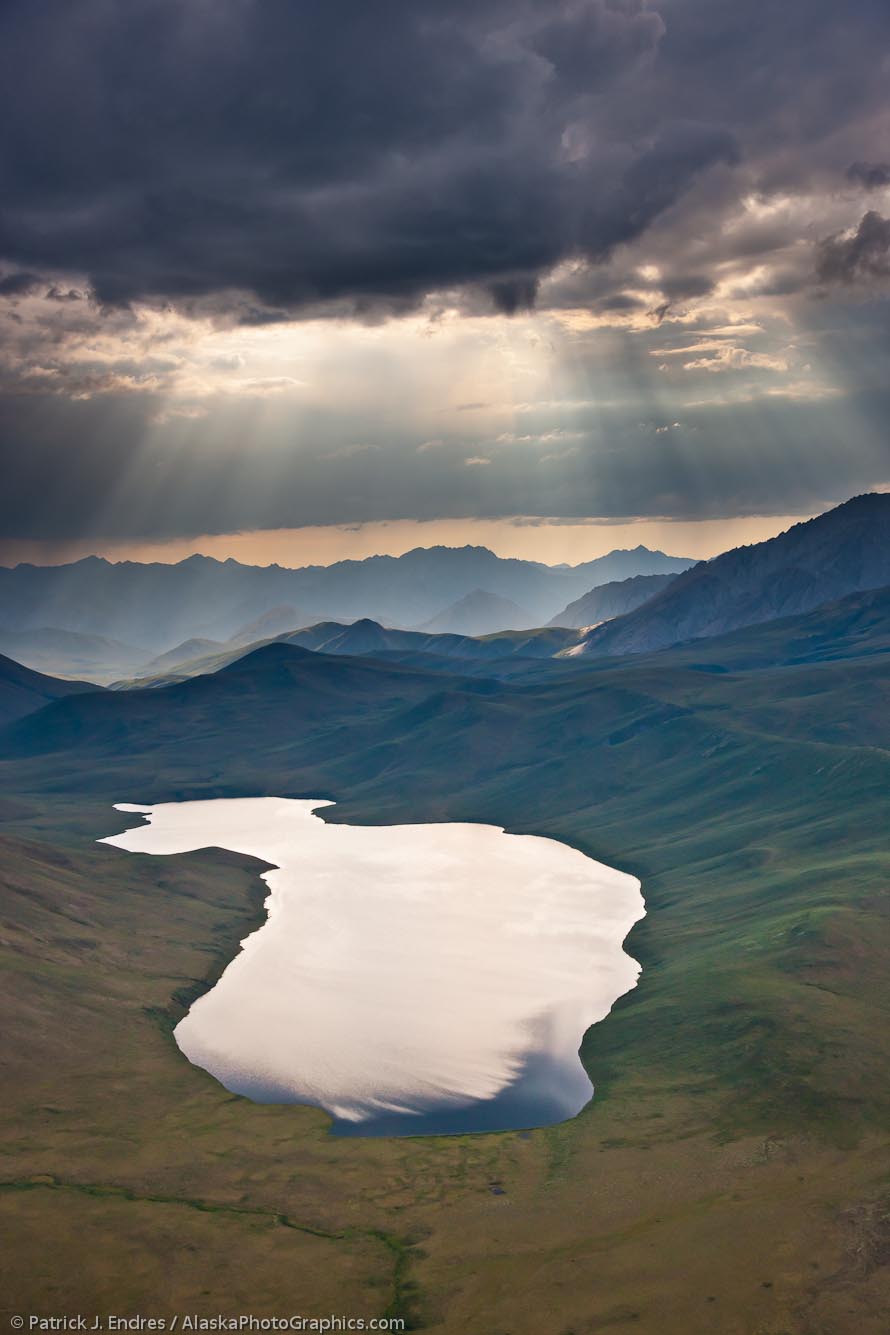
Brooks range mountains, arctic, Alaska.
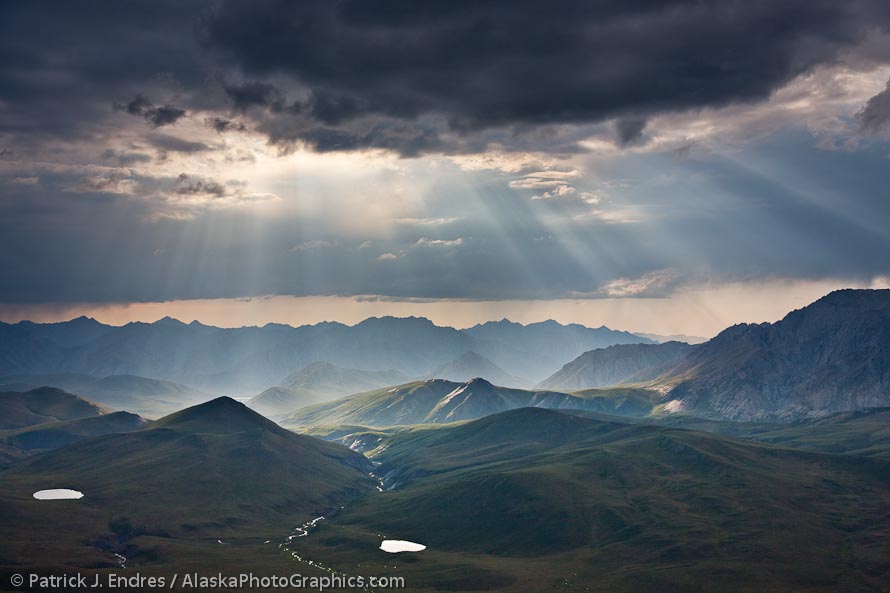
Brooks range mountains, arctic, Alaska.
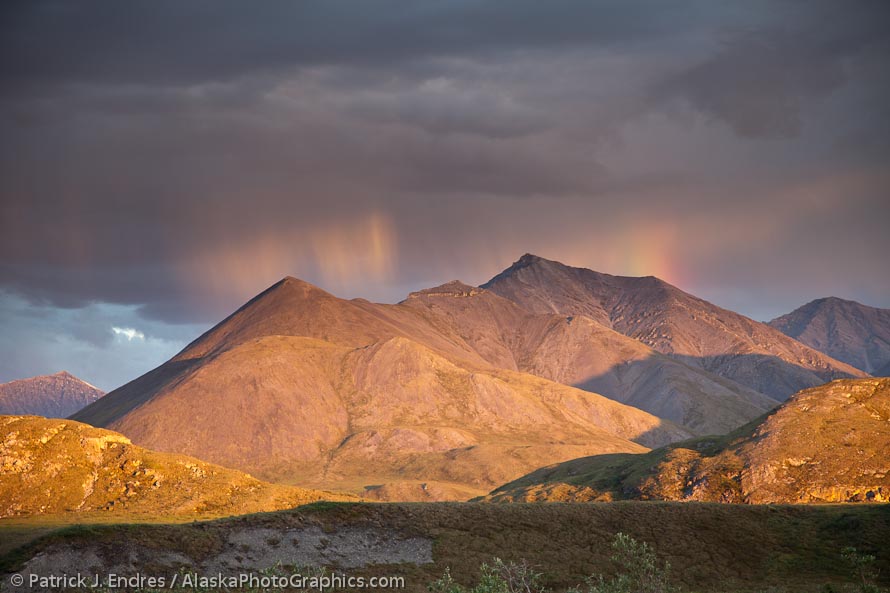
Arctic National Wildlife Refuge, arctic, Alaska.
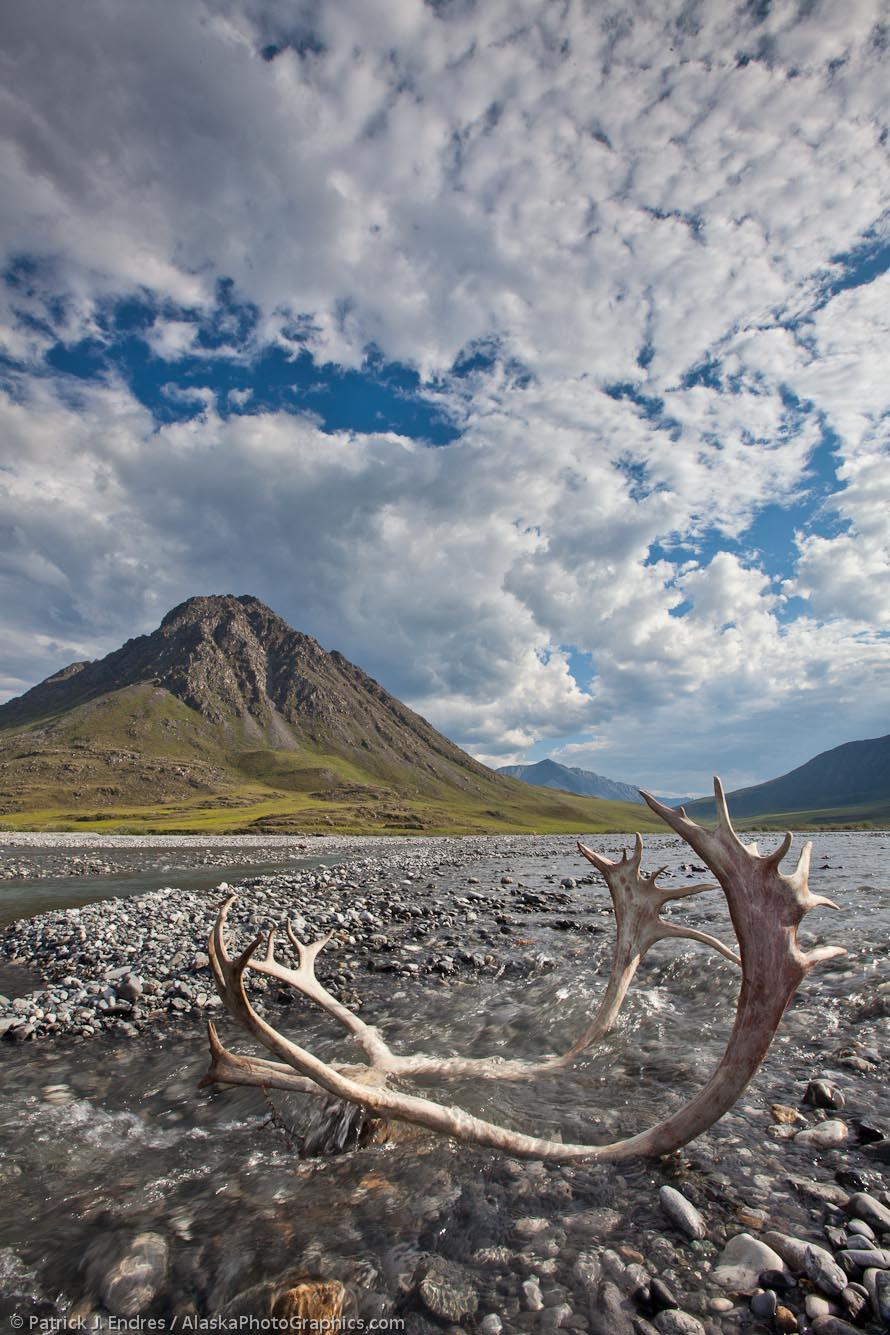
Caribou antlers, Marsh Fork of the Canning River, Arctic National Wildlife Refuge, Alaska.
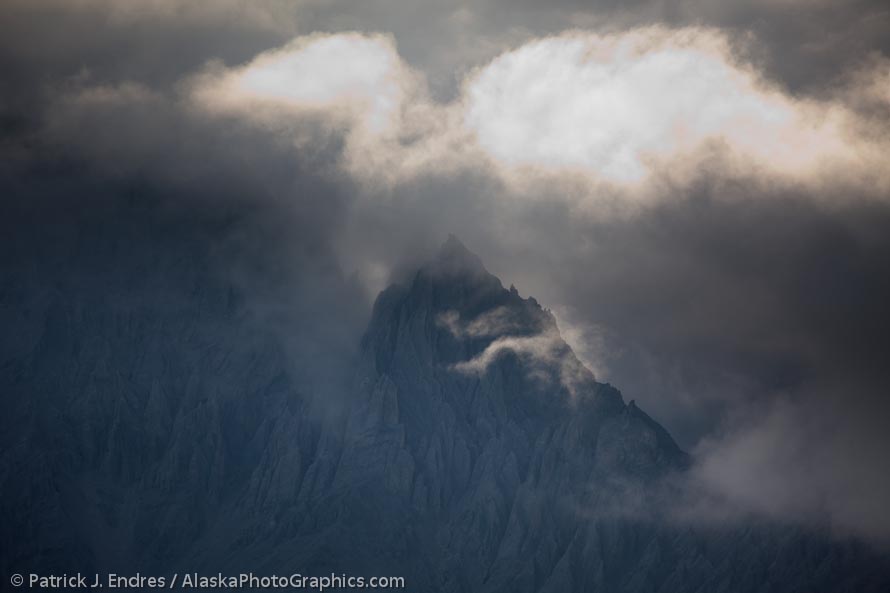
Brooks range mountains, Arctic National Wildlife Refuge, Alaska.
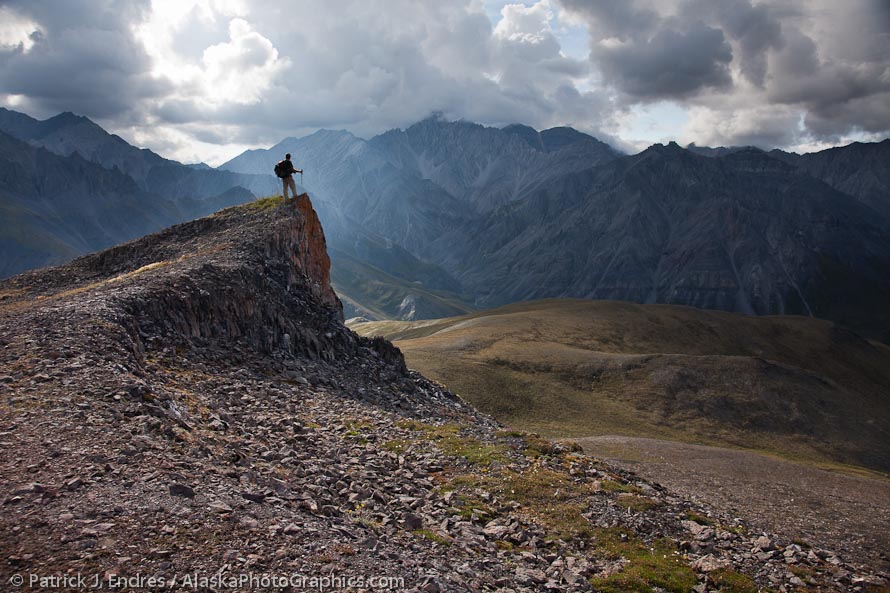
Hiking in the Brooks Range moutnains, Arctic National Wildlife Refuge, arctic, Alaska.
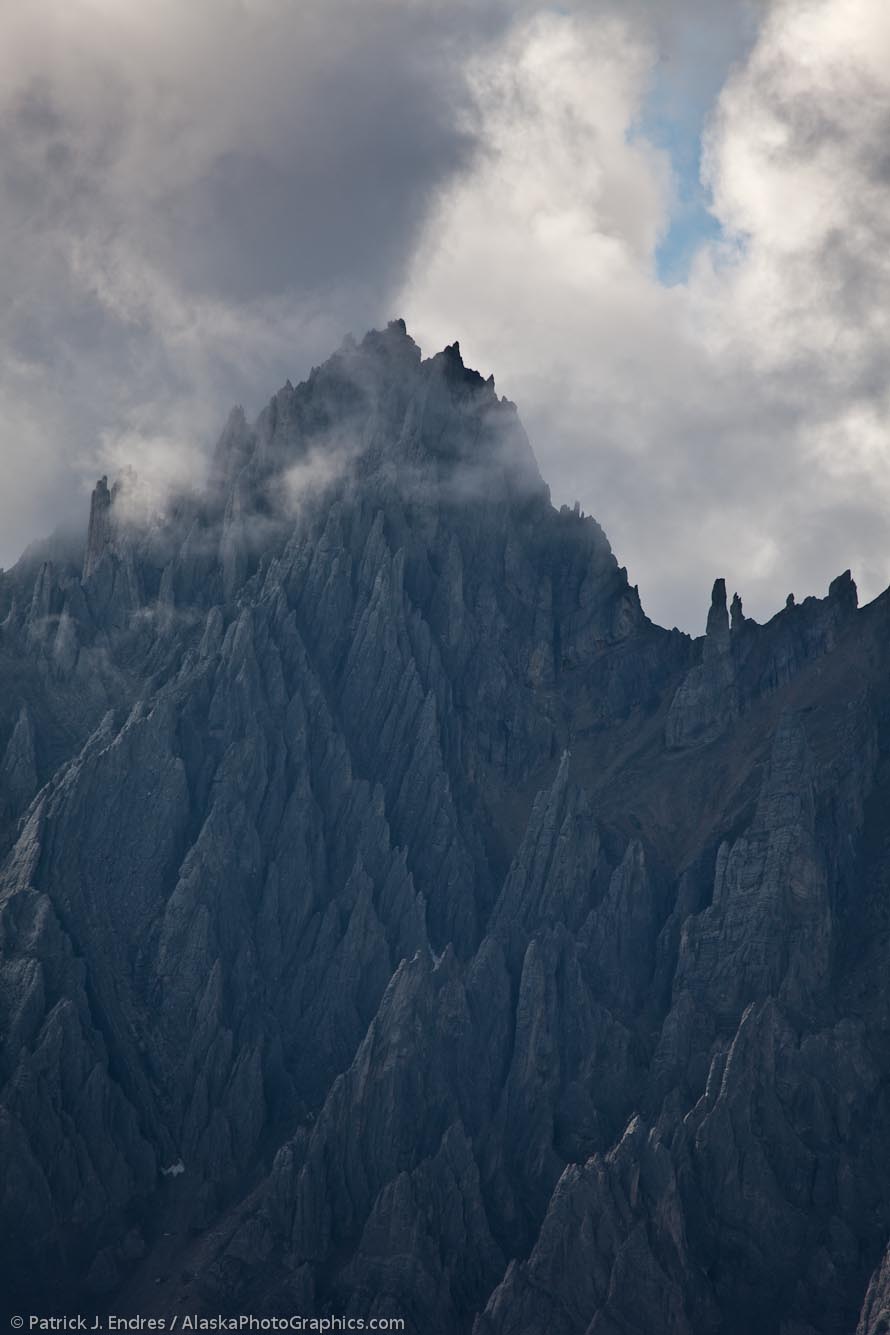
Brooks Range mountains, Arctic National Wildlife Refuge, arctic, Alaska.
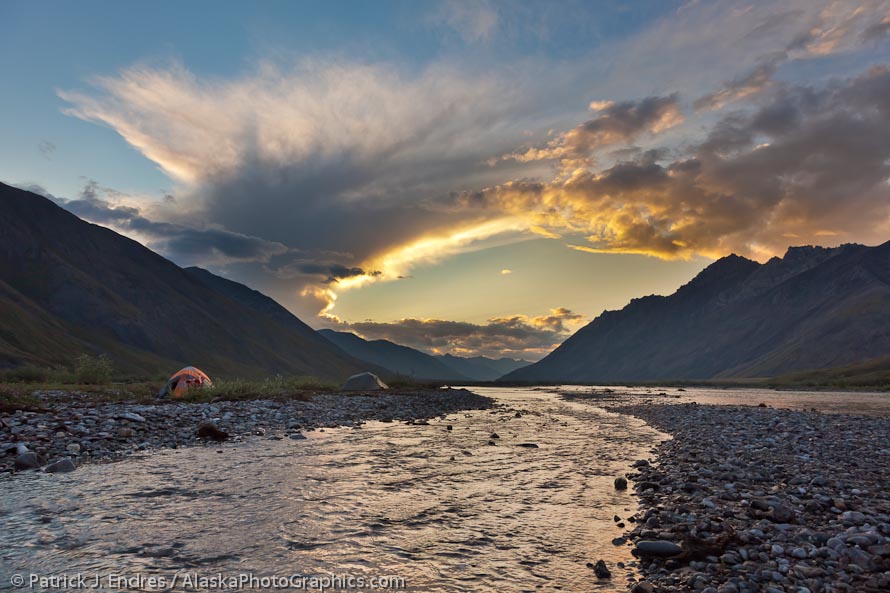
Evening camp along the Marsh Fork of the Canning River, Arctic National Wildlife Refuge, Alaska.
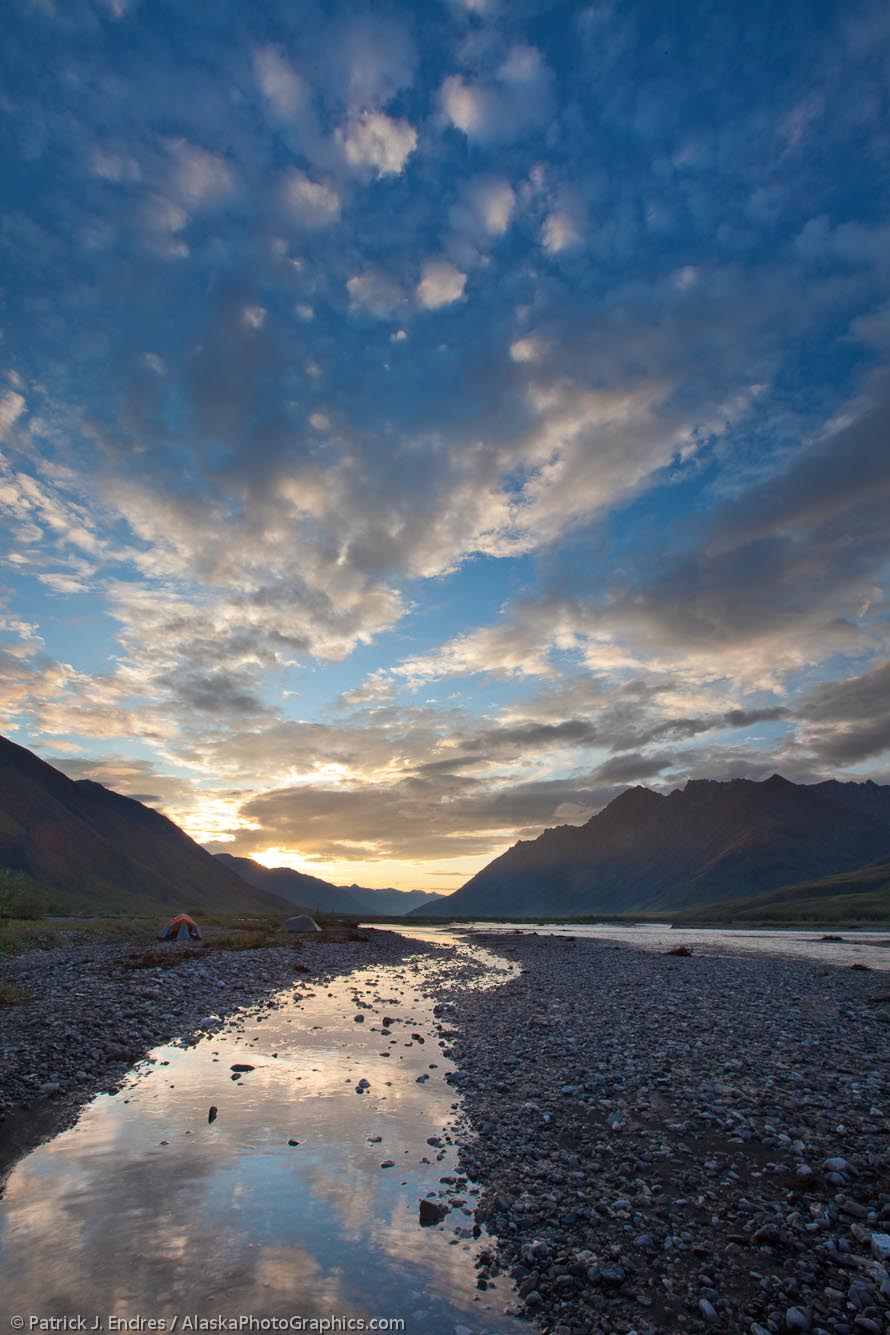
Evening camp along the Marsh Fork of the Canning River, Arctic National Wildlife Refuge, Alaska.
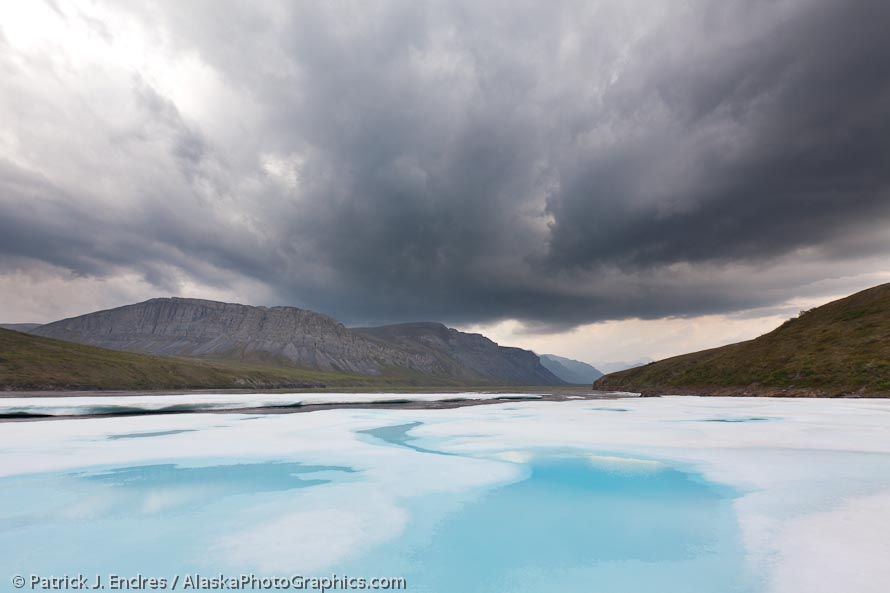
Aufeis, Marsh Fork of the Canning River, Arctic National Wildlife Refuge, Alaska.


Brilliant! Too many places to visit in a lifetime, let alone 1 summer.
Fantastic photos! I agree, I like high, broken clouds. I love the first 2 photos with the rays.
I do, however, want clear skies for the first great aurora in years they are predicting tonight. Been looking at the forecast and it is not looking good anywhere.
Thanks Mike,
Any luck with the aurora?
Hi Patrick,
Cooper is home with me today. We’d like to know if there are any fish in the Brooks range mountains, arctic aerial lake photo.
And, are there any fish in the stream where you camped?
Jon and Mike, thanks guys.
Steve and Cooper,
I did catch some arctic char a little further down river where the water was deeper, and there were also some arctic grayling in the river too. I’m not sure about that mountain lake. It depends on how deep the water is. It looks probably that some fish could be in there. I’ll have to ask Dirk if he knows.
1,2,5,7 are just plain brilliant!
These are outstanding! Definitely hoping to get there some day soon.
Thanks Mike.
Wow. I am moving to Fairbanks in a few weeks for college and can’t wait to photograph everything, even though I’m moderately new to DSLR photography so my pictures won’t near as good. But looking at all these pictures has gotten me excited to try! Thankyou for all your hard work; through your pictures it is very obvious to see how much you love photography and nature!
Sadie,
I came to Fairbanks 30 years ago for college. It’s a great University and a great location. Enjoy your future ventures.
Hey Patrick
Great shots – you had a great trip. I don’t recognize #7 (and #5) at all – where is that peak?
“Aufeis” is one word. 🙂
Cheers
Carl
Carl,
Thanks for the German word clarification, I’ll edit that into correction 🙂
The mountain peaks you were referring to in #5 & #7 were taken west of the river on a day hike in which we went about 4000 vertical feet. Approximately 5 miles from the confluence. Crazy hike. Roasting hot, then pouring rain, then insane mosquitoes, then more sun, then some cool clouds. I wish I could have stayed high for a few more hours, the clouds and later afternoon light unfolded but we were working our way down to camp by then.
Hey Patrick,
Thanks for the info. I’ll look around next year and see if I can find them.
That makes it hard up there, dayhiking for photos, and then having to hoof it back to camp when the weather goes awry – also means having to carry WAY too much rain gear, insulating clothes, etc along with the camera stuff.
There was much less aufeis along the Marsh Fork this year than most years, due a lower snowfall in the winter, I understand.
Cheers
Carl
No luck with the aurora, fell asleep in my truck under clear skies and woke up an hour later to pouring rain. The work of a photographer is not as glamorous as people think. Always chasing light and hoping for decent weather…sigh.
Carl,
So true…I carried everything from shorts to a down jacket, along with rain gear, food, water, plus gear. It gets a little extreme for a day hike.
Mike,
I’ve shared your evening experience many times. I checked some real time space weather data about 8:30pm and it did not look very promising, so I slept 🙂
Hey Patrick
Down jacket? Allow me: This is what you need. Under 6 (yes, six) ounces.
Cheers
Carl
Carl,
The link got me to the site, but did not load the specific item. Which one was it?
Patrick
Hey Patrick
It should load the Ex Light Down Jacket. It’s killer .. buy a size larger than normal, and your life will be changed in ways you can only imagine.
Try this link.
Cheers
Carl