

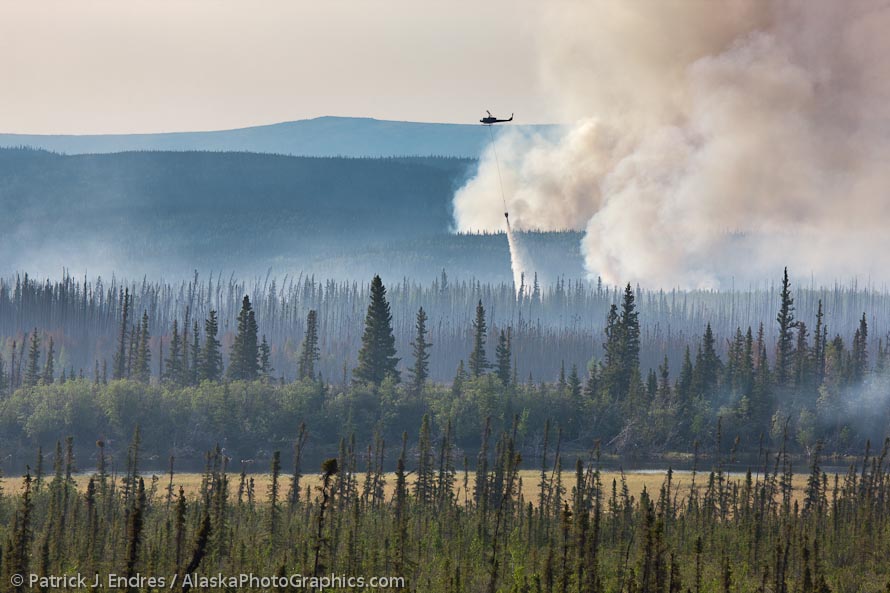
Helicopter drops water on a wildland forest fire, May 2010 Eagle Trail fire near Tok and Tanacross, Alaska. Canon 1Ds Mark III, 100-400mm IS (220mm), 1/640 @ f6.3, ISO 200
If you can’t beat em, join em. That was my thought over the Memorial Day weekend-sort of. This is in context to the wildland forest fires and subsequent smoke that is plaguing much of interior Alaska. Intsead of running from the smoke, I figured what the heck, I might as well run to it, and see if I can capture some images of the complex and extensive process of fighting these fires. Here is a quote describing the current forest conditions:
“A low winter snowpack in north-central Alaska and warm spring temperatures combined with a lack of precipitation has driven fuel conditions to historical maximum levels at Tok and Fairbanks Alaska. As surface drying FFMC values climb into the 90 range the potential for rapid spread rates, running crown fire in black spruce and conifer-hardwood mixes is greatly increased. Cumulative curing in feather mosses and surface litter and deep drying in duff layers will contribute to high intensity fires. A high pressure system centered over Alaska continues drying fuels to more critical levels. A break down in the upper level ridge beginning next week may bring conditions favorable for plume dominated fires. Current fuel driven fires are exhibiting short crown-fire runs and prevalent torching. Moderate range spotting is becoming more common.”
Well, that pretty much says it. I ventured to the Eagle trail forest fire near Tok Alaska over the weekend with hopes of getting some front line coverage of the fire. It is currently rated 4 on a scale of 5 in respect to resource allocation and is the number 1 fire in the nation (not is overall size, but priority). I was not able to get access to the front lines of the fire for reasons I don’t want to expound upon at this point. Additionally, the day after I arrived, the relative humidity and winds dropped a bit and the fire continued to burn but did not gain significant ground. Everyone I met said “you should have been here a few days ago when the fire jumped the road!” Yes, I should have been, isn’t that often the story. I learned a lot about the process of fighting fires and got a few photos, but the front line work will have to wait for a more dedicated and well-planned excursion.
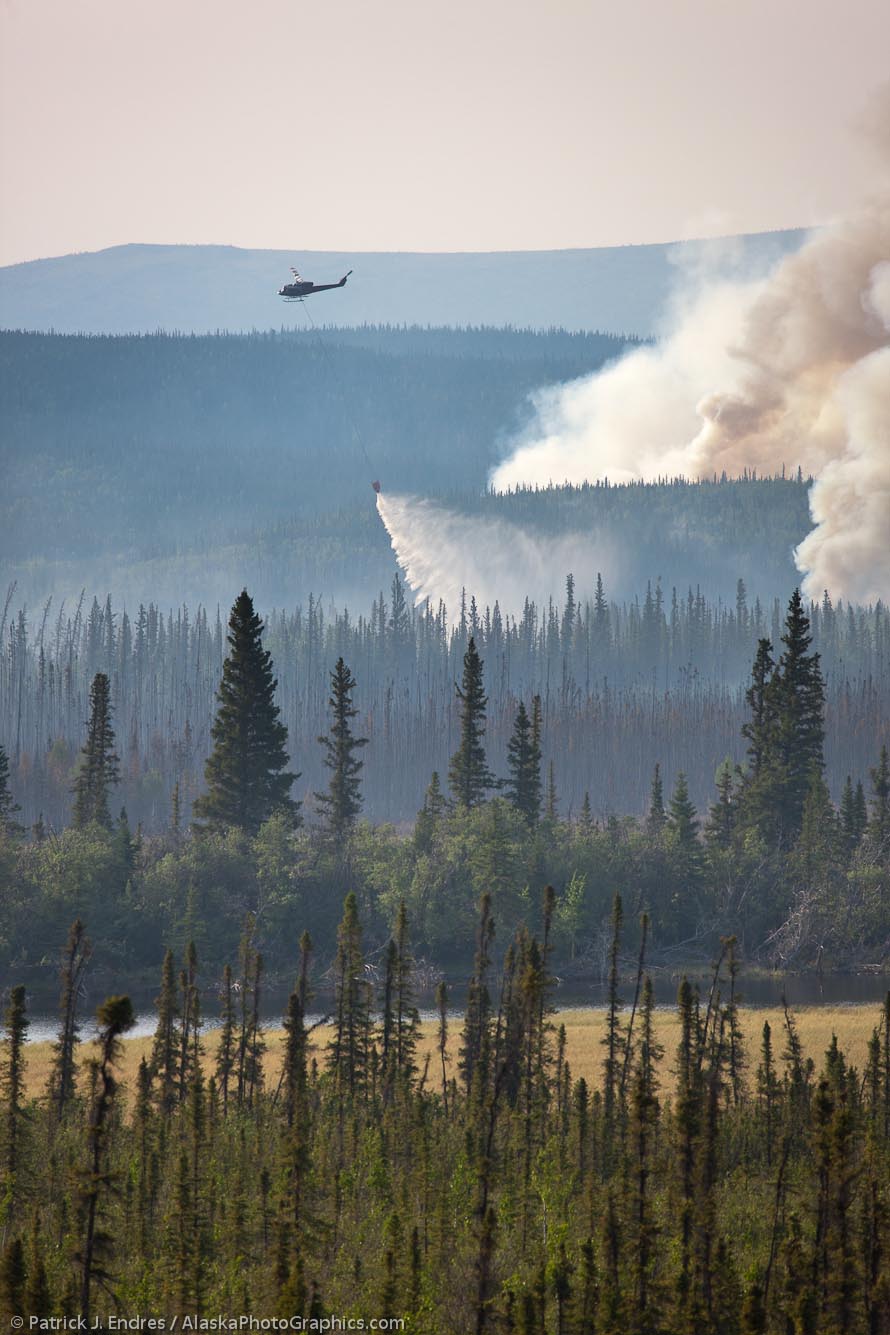
Helicopter drops water on a wildland forest fire, May 2010 Eagle Trail fire near Tok and Tanacross, Alaska. Canon 1Ds Mark III, 100-400mm IS (330mm), 1/400 @ f6.3, ISO 200
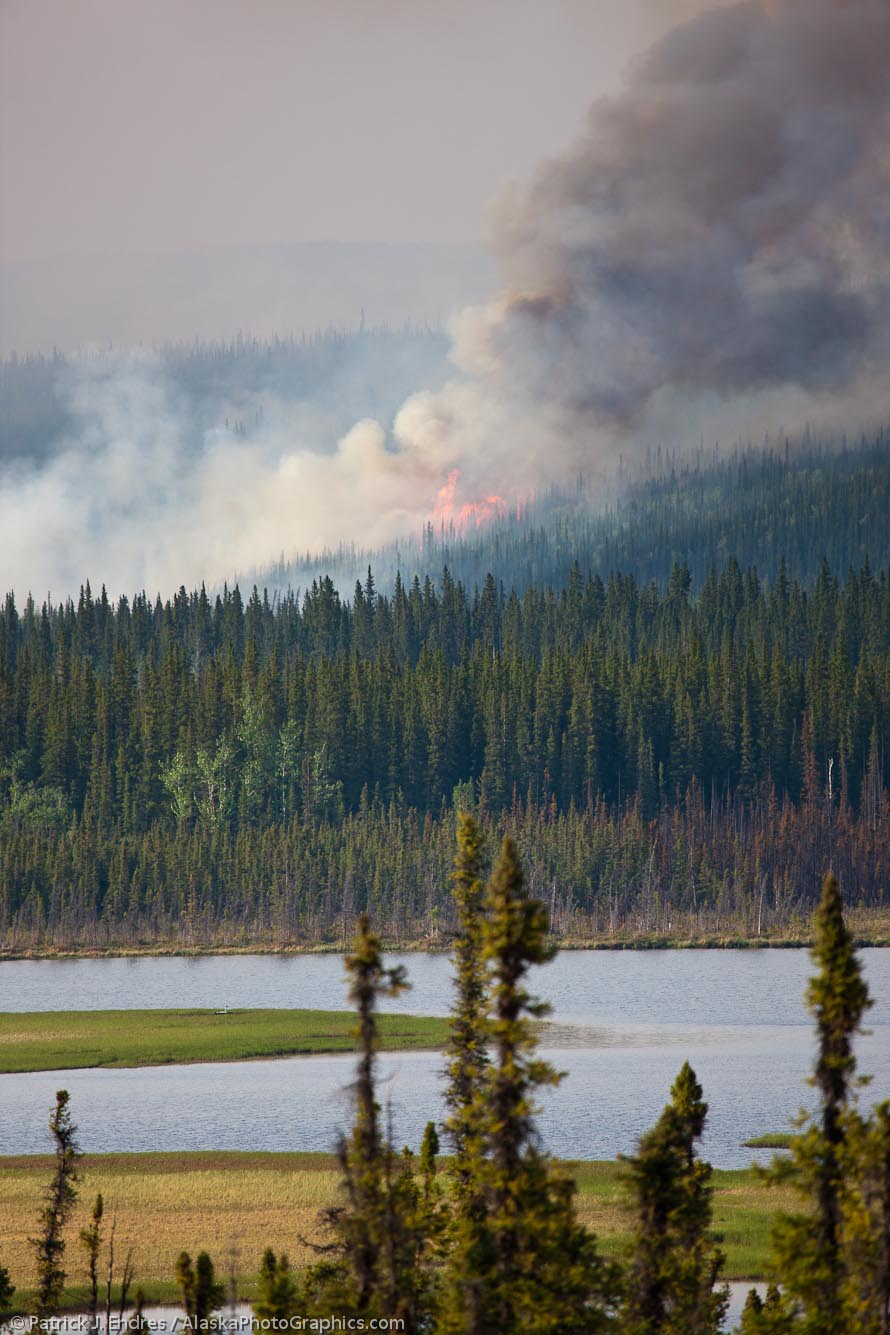
Wildland forest fire, May 2010 Eagle Trail fire near Tok and Tanacross, Alaska. Canon 1Ds Mark III, 100-400mm IS (400mm), 1/400 @ f6.3, ISO 200


Interesting photos! BTW, is that a swan on the island in the lake in the last photo? What was the population of wildlife like on the perimeter of the fire?
Eli, You are observant, yes that is a trumpeter swan nesting in the photo. I saw a moose in the same filed the day before but was unable to stop for a photo. I’m not sure about the population dynamics on the edge of the fire, other than the fact that they were indeed fleeing the fire and smoke and were showing up in adjacent areas.
I just thought it was funny how it was nesting in the grass seemingly oblivious of the destructive inferno raging a short distance away.
Patrick,
I was the PIO from the Alaska Fire Service JIC (at Ft. Wainwright)who called down to Tok and made arrangements (I THOUGHT…!) with the PIOs on the fire for you to get out on the line. What happened that this did not occur? Is it something I need to fix?
1,2 = magic!
It was a very scary and nerve racking exspence for ma and the people of tanacross. and a lot of home’s could have burned unless the fire depatment hadnt come.